


Centrifugal Casting Playlist
0:51
0:21
0:21
0:41
0:11
0:34

1:41
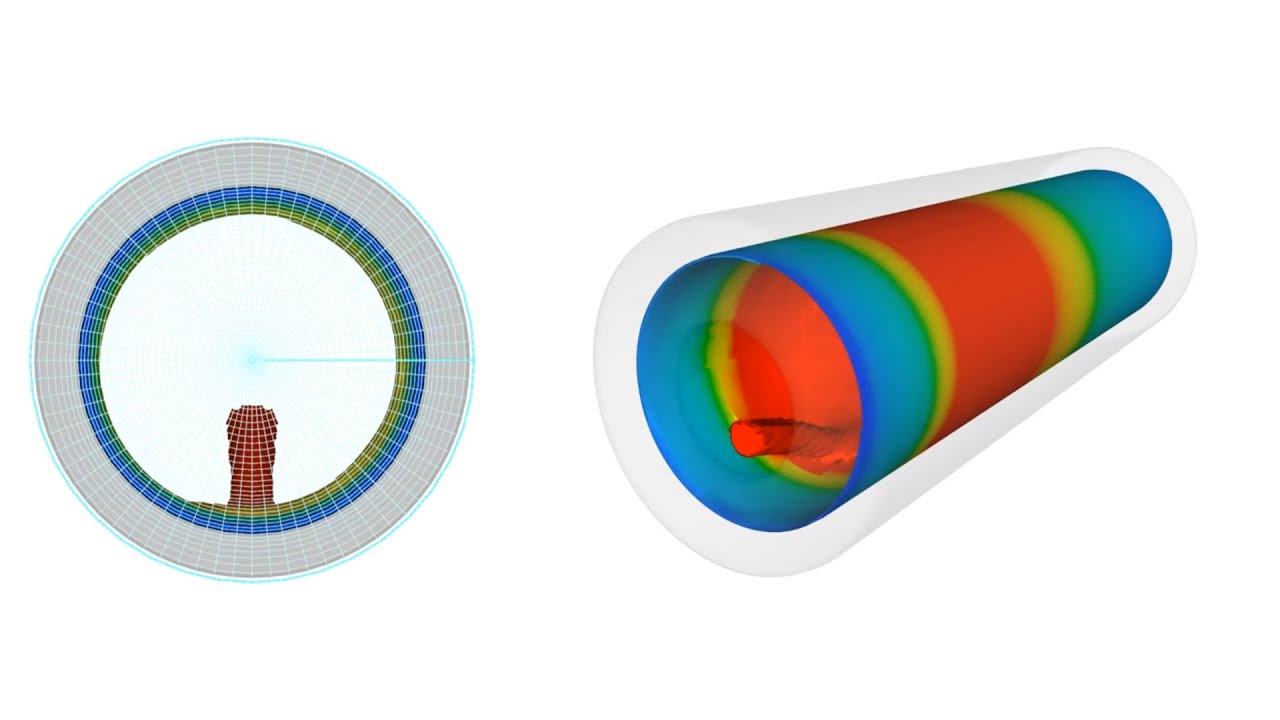
This simulation shows pouring a centrifugal casting of a horizontal pipe. The focus of this simulation is analysis of the filling pattern. The objective of the simulation was to prevent wall separation and have a smooth filling that did not trap air.
In this filling simulation of a horizontal pipe casting, an end-on view of the filling at left shows the cylindrical mesh used to resolve the flow. This simulation was run on 10 cores of a medium-level CPU (AMD 1950x) in 11 minutes! Even with this relatively coarse mesh resolution, a great deal of process knowledge can be obtained. Once a rough idea of the proper values for the process parameters such as pour rate, melt superheat, and initial mold temperature have been identified, higher mesh resolutions can be used to zero in on more exact values.
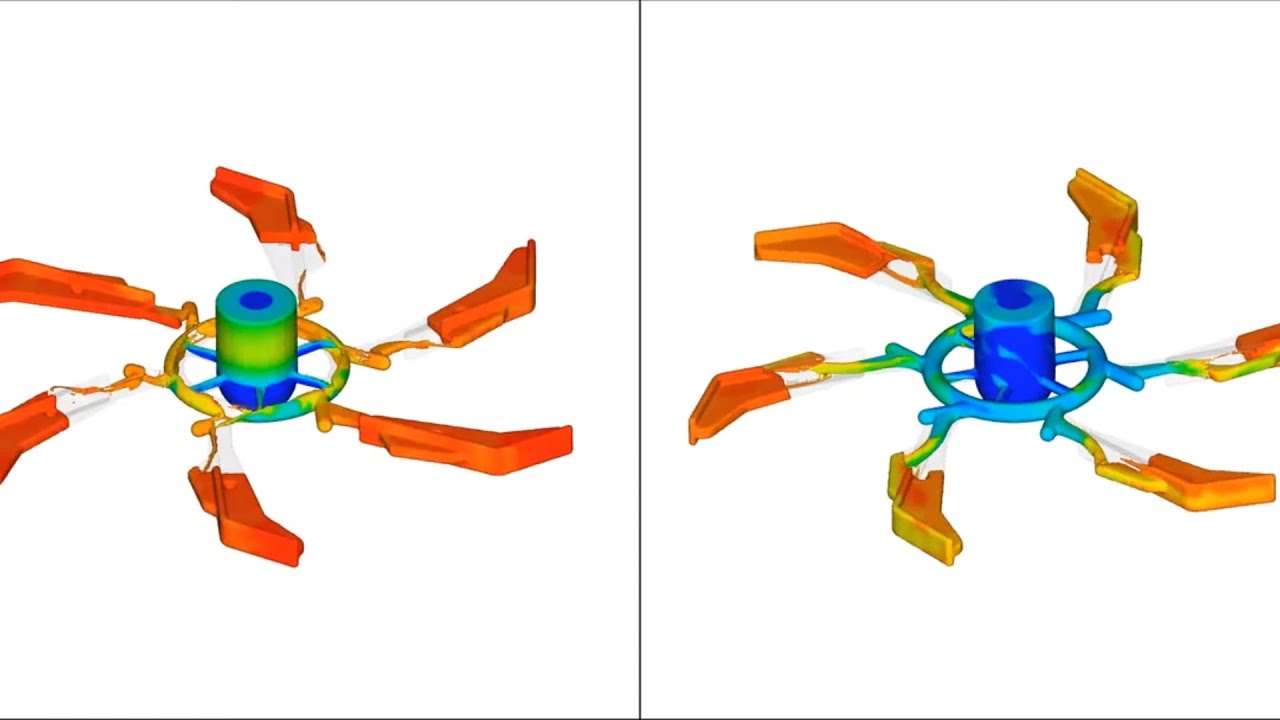
A comparison of entrained air in the melt with a ramped up spin rate (left) vs pouring into a mold spinning at a constant rate. The simulation indicates that it is best to spin up the mold gradually to allow the runners to fill before the maximum spin rate is applied. A rotating mesh is used to achieve high filling accuracy as well as fast simulation runtimes. Both simulations ran in about 4 hours on 12 cores of an AMD 2990WX.
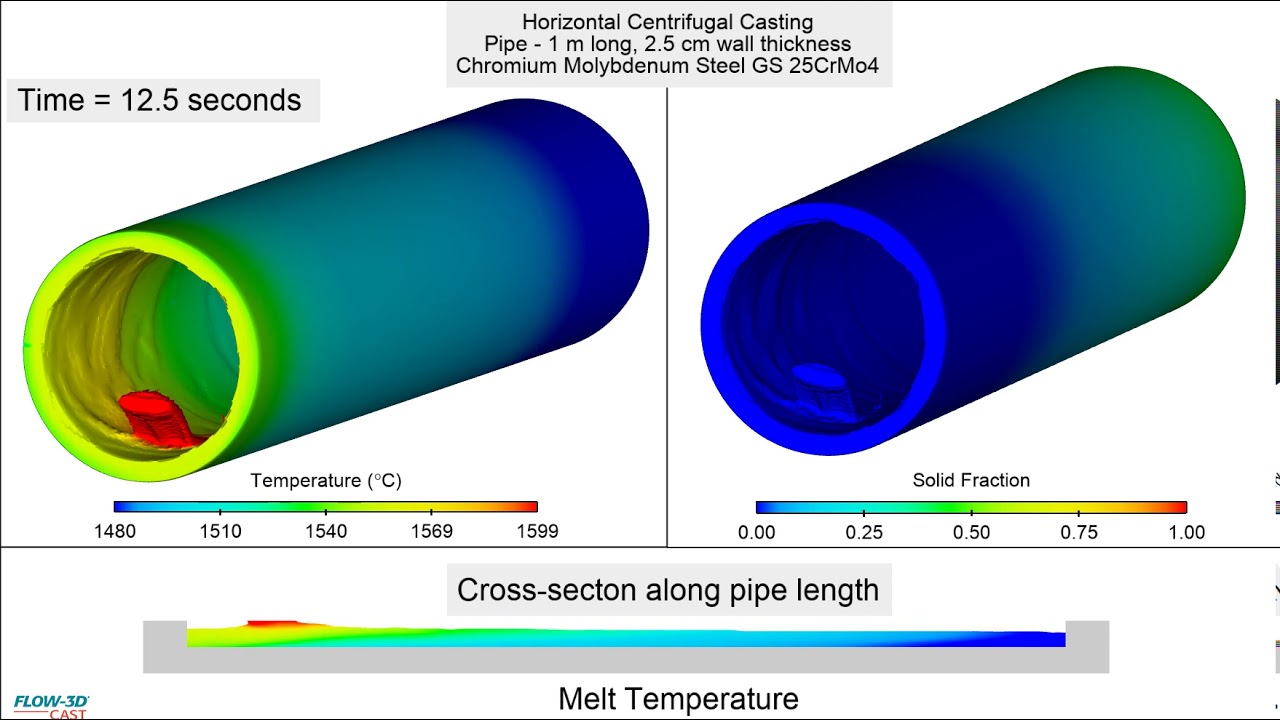
This simulation represents the filling stage of a pipe casting manufactured using a horizontal centrifugal casting process. The pipe is cast with Chromium Molybdenum Steel GS 25CrMo4 and is 1 m long and 2.5 cm wall thickness. The goal of casting pipes is to ensure that the thickness is uniform along its length. The cross-sectional view at the bottom of this video shows the distribution of the melt along its length. The melt should be uniformly distributed before solidification begins.
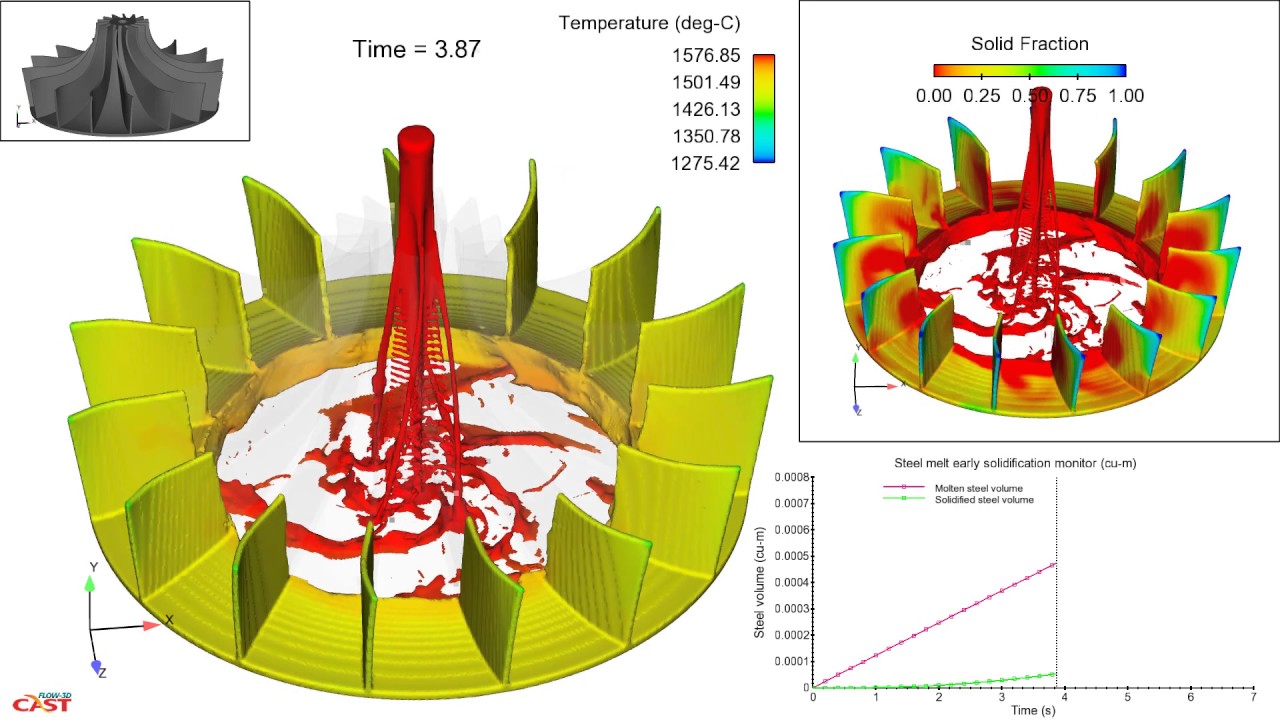
Partial filling simulation of a steel impeller centrifugal casting process. The spin is set at 250 rpm. FLOW-3D CAST simulation software is used to simulate and show early freezing issue in casting impeller vanes. Courtesy of Simulated Engineering Incorporated.
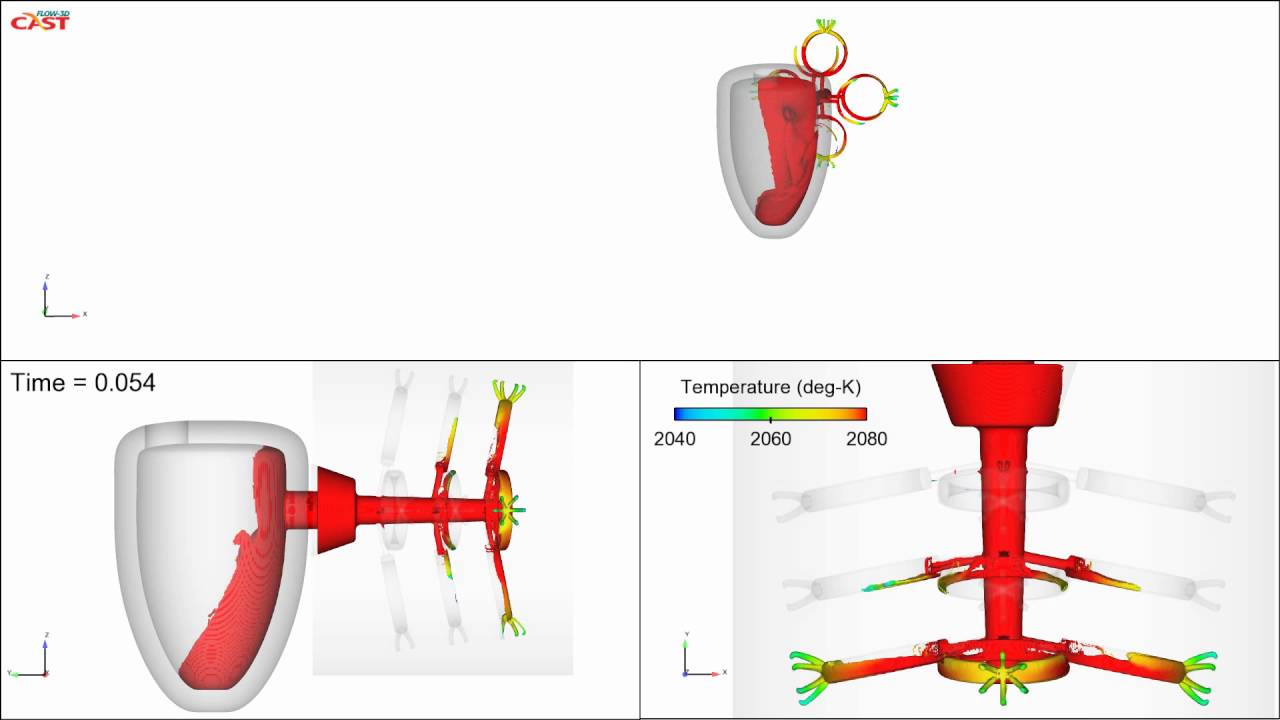
FLOW-3D CAST simulation of centrifugal casting with non-inertial reference frame motion on the top and stationary motion on the bottom left.
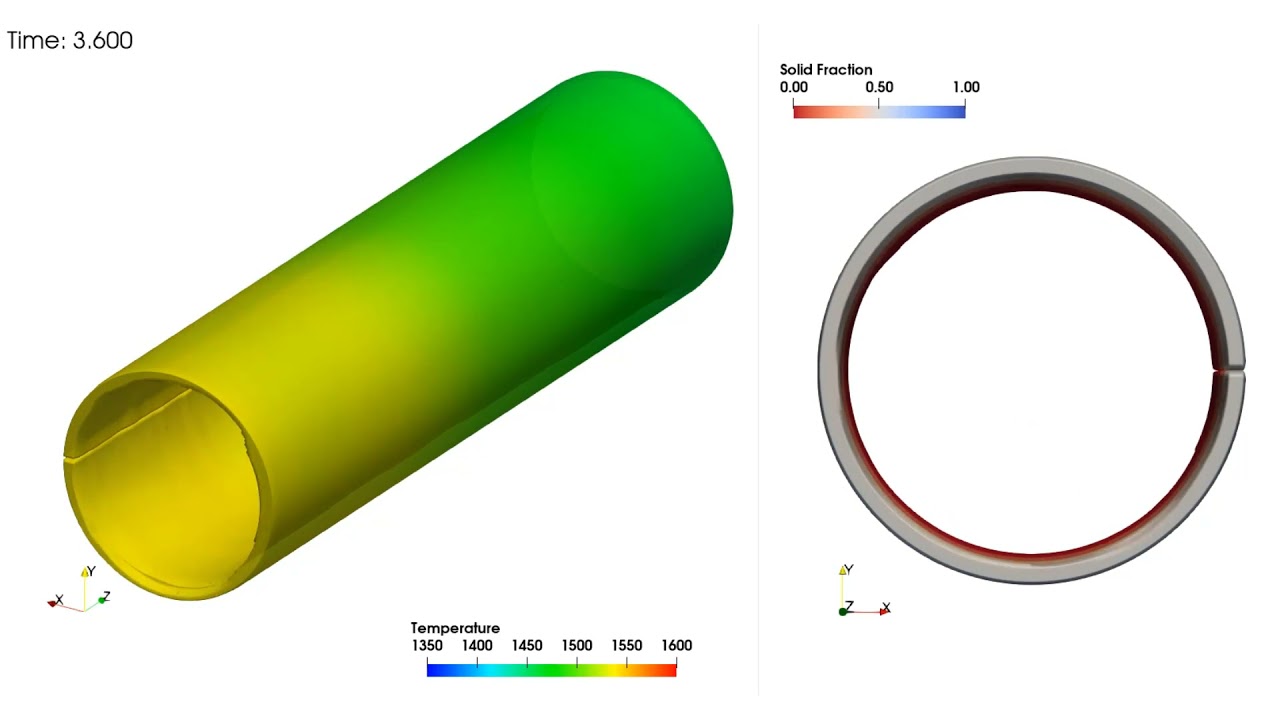
This simulation represents the vertical centrifugal casting of an aluminum A356 flange. Melt is introduced into the mold via a vertical sprue at a rate of 5 kg/s. The mold is spun about its vertical axis at 500 rpm, providing an outward acceleration of 200 g at the surface of the mold. The left frame shows the pickup of the melt by the mold and helps determine the rate at which the melt distributes vertically over time. The upper right frame shows the solid fraction in the melt; this analysis helps determine the proper mold preheat to avoid premature solidification. In the lower right frame, the entrained air mass concentration is shown. As long as solidification does not occur prior to complete filling, all of the entrained air will be forced to the inner diameter of the casting, to be machined off later.